Arriving in Hue, we quickly found our hotel, one that had been recommended by others who we had met on our travels. We were welcomed with a refreshing freshly squeezed juice and a free breakfast on arrival !
Hue is a small city sitting on the banks of the Perfume river, and the previous home of many emperors – hence the multitude of palaces and tombs scattered around the area.
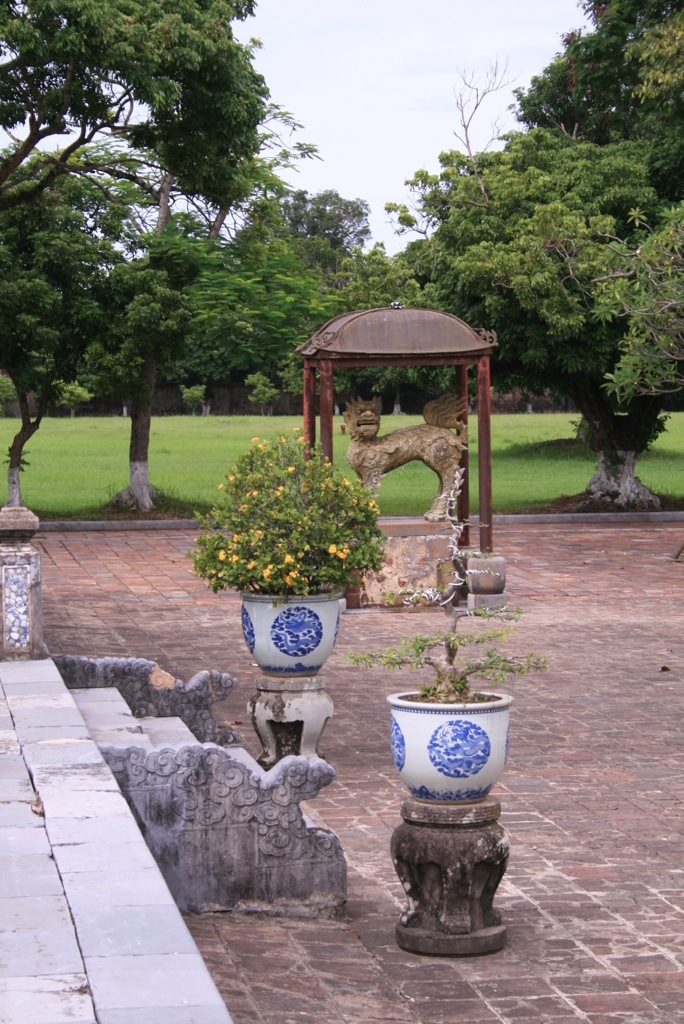
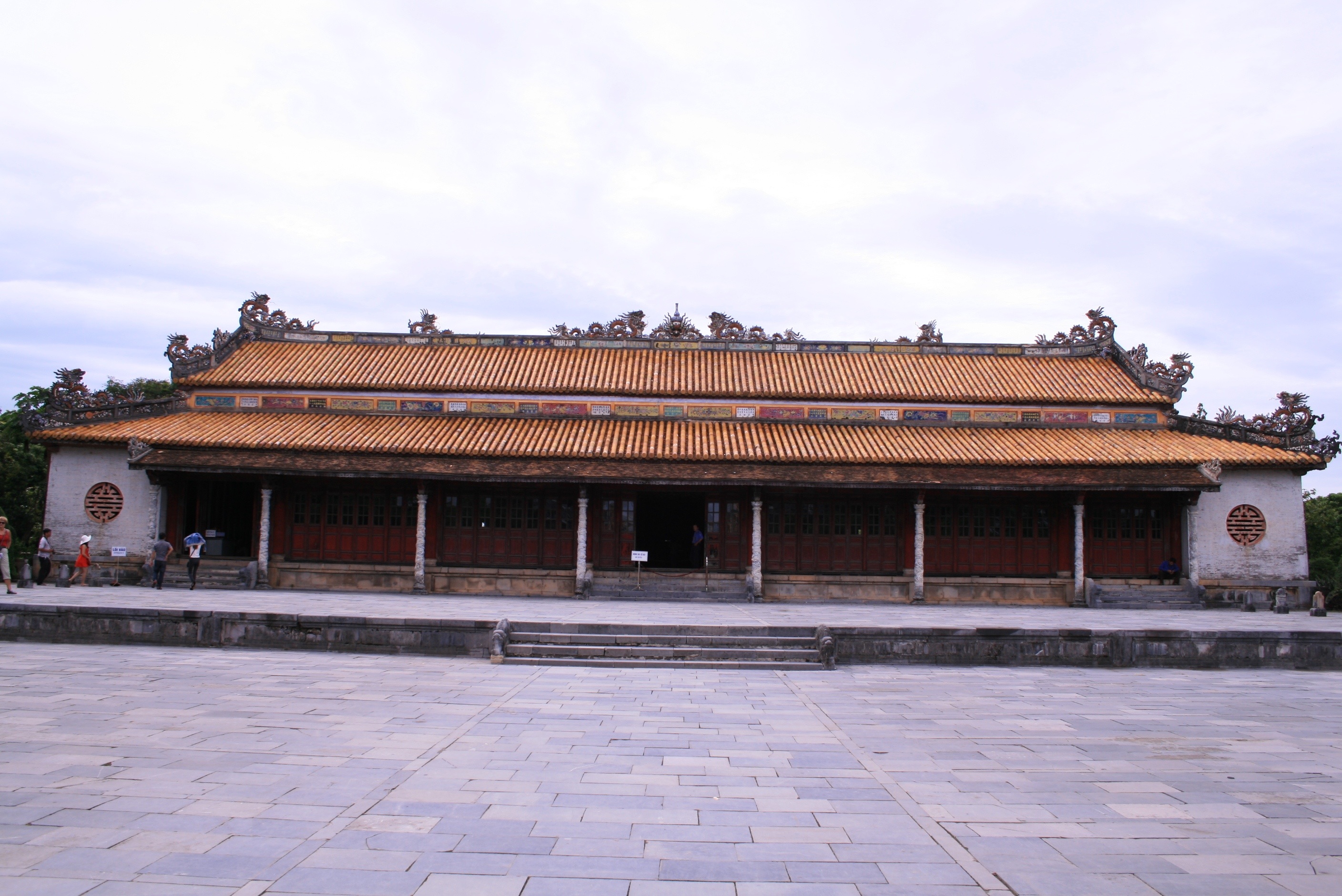
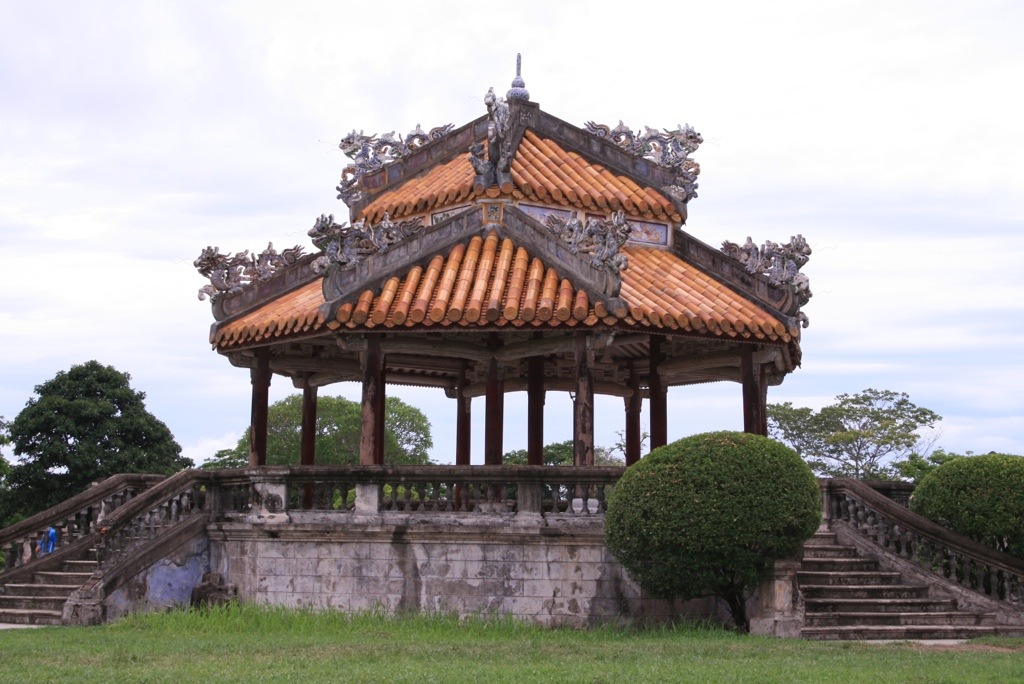
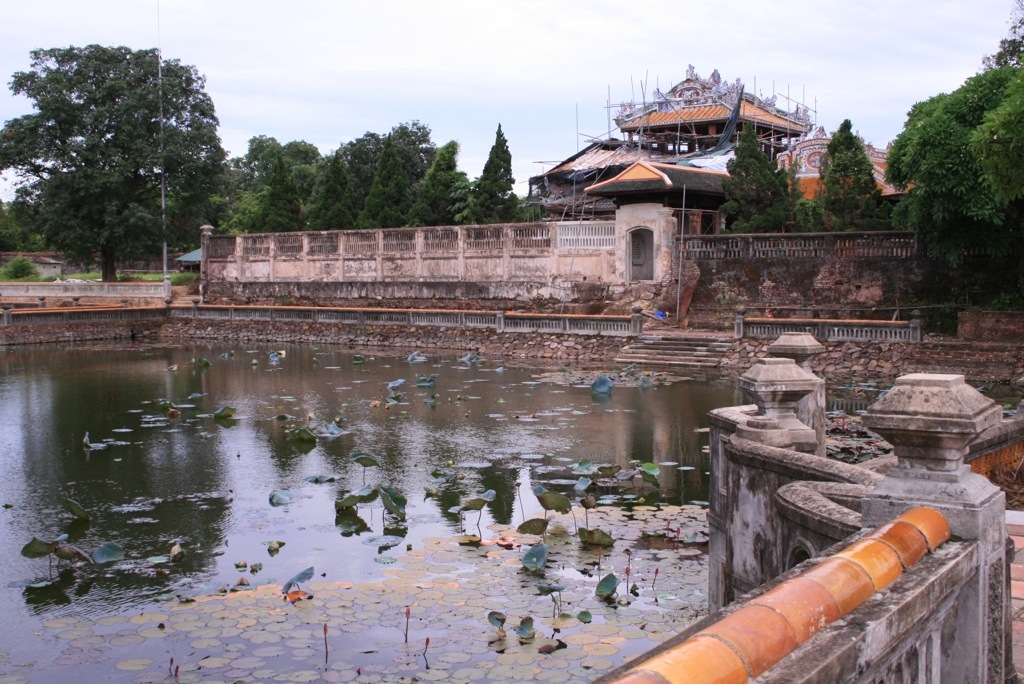
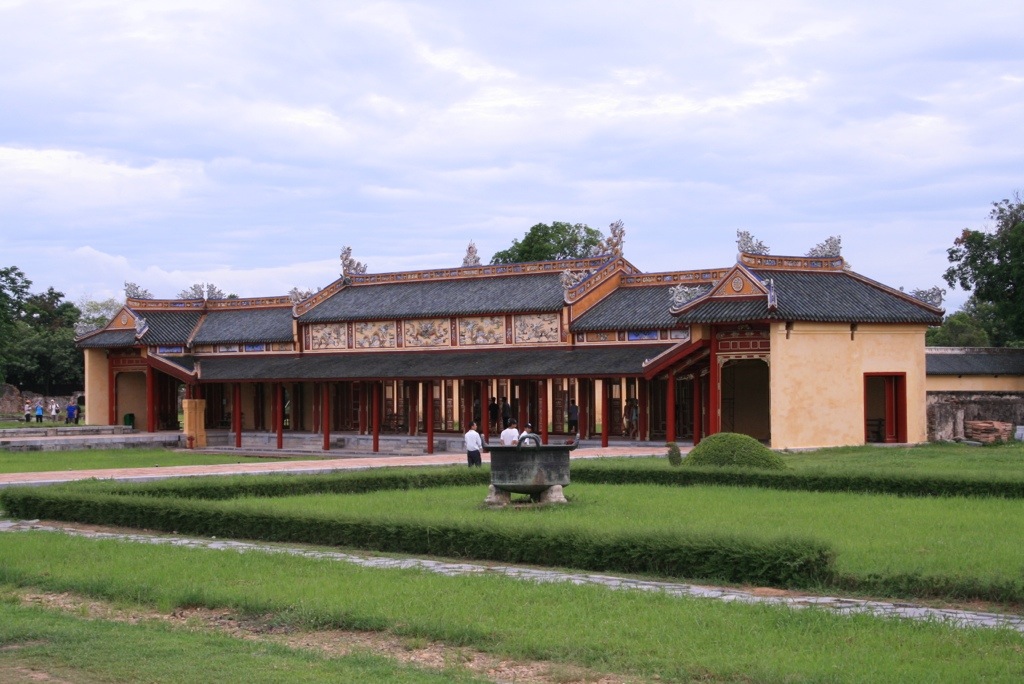
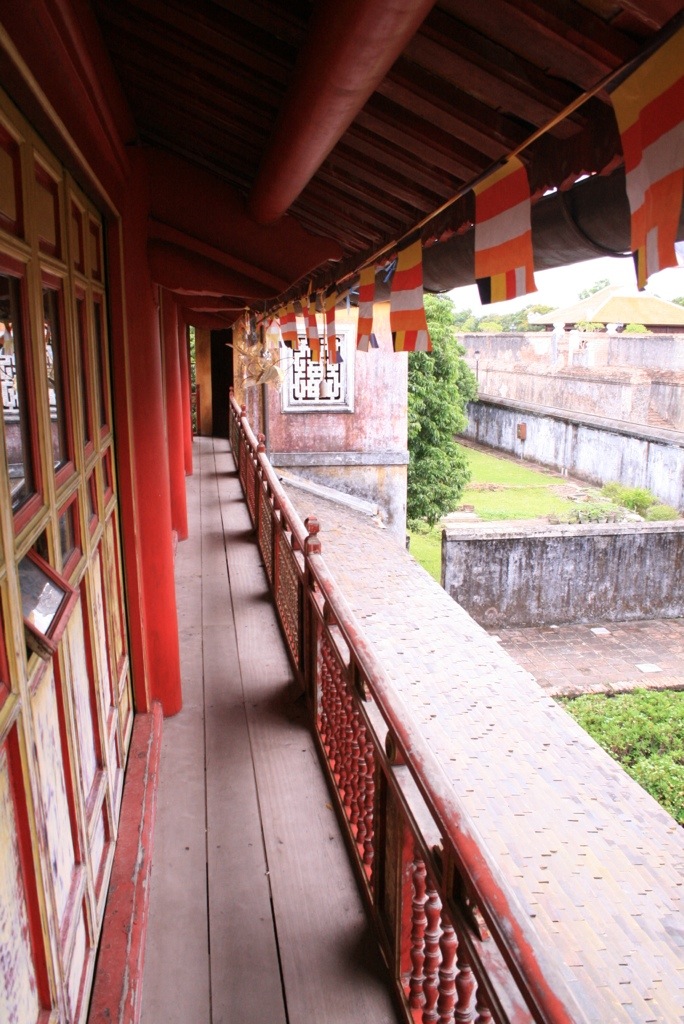
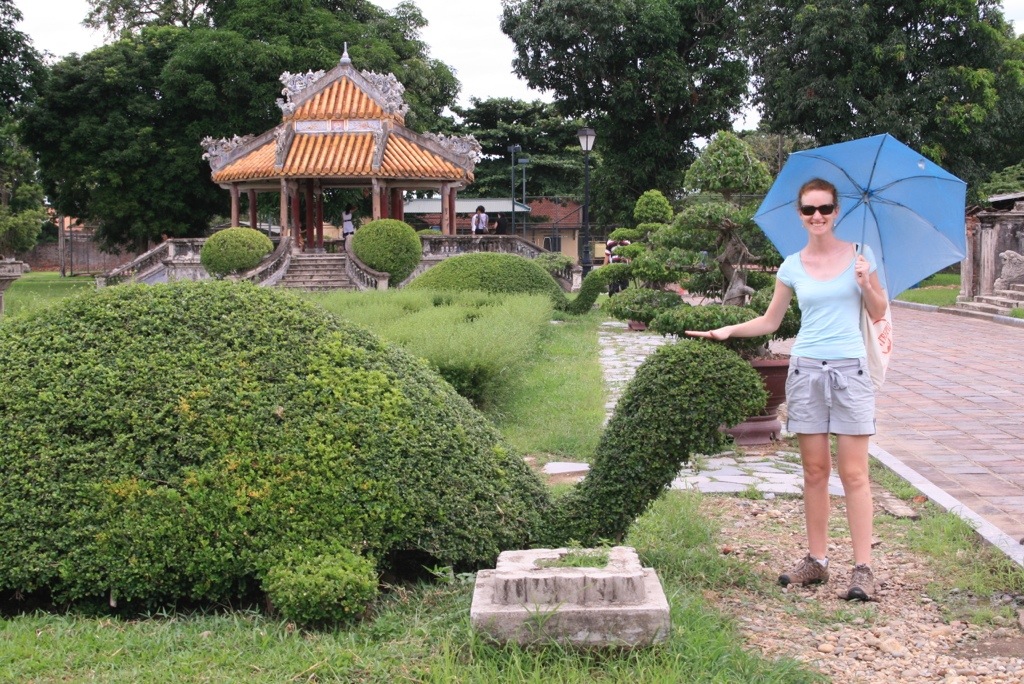
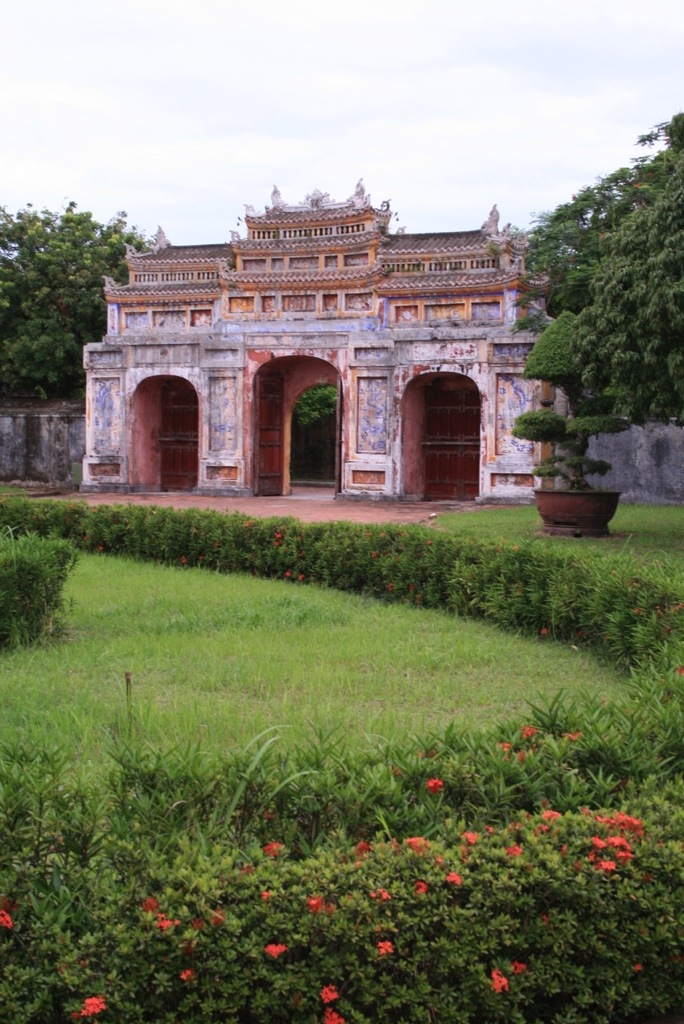
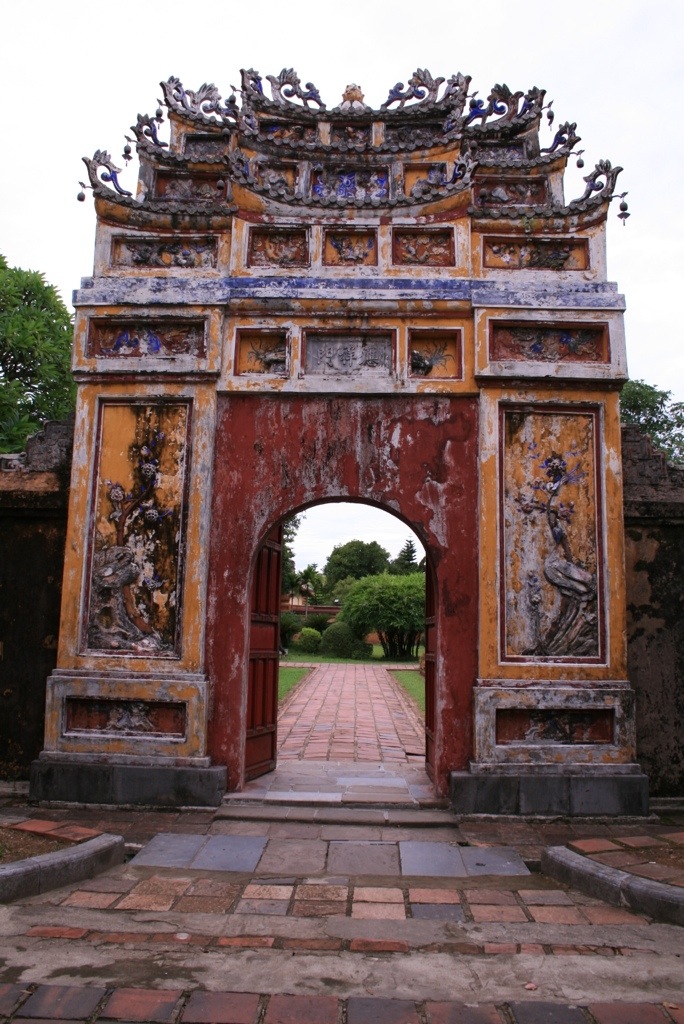
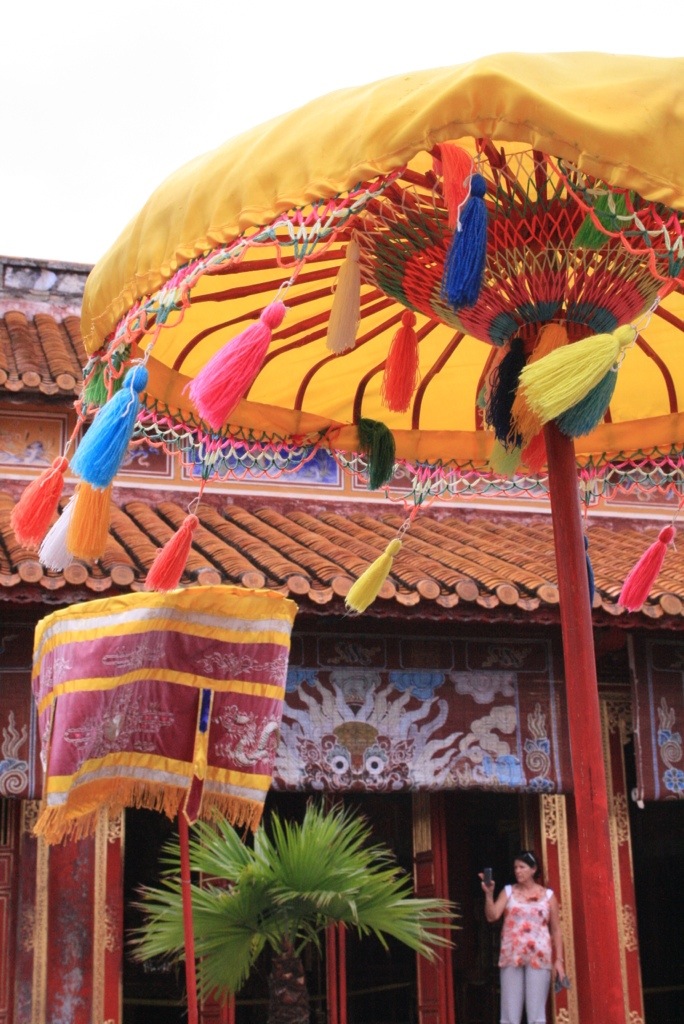
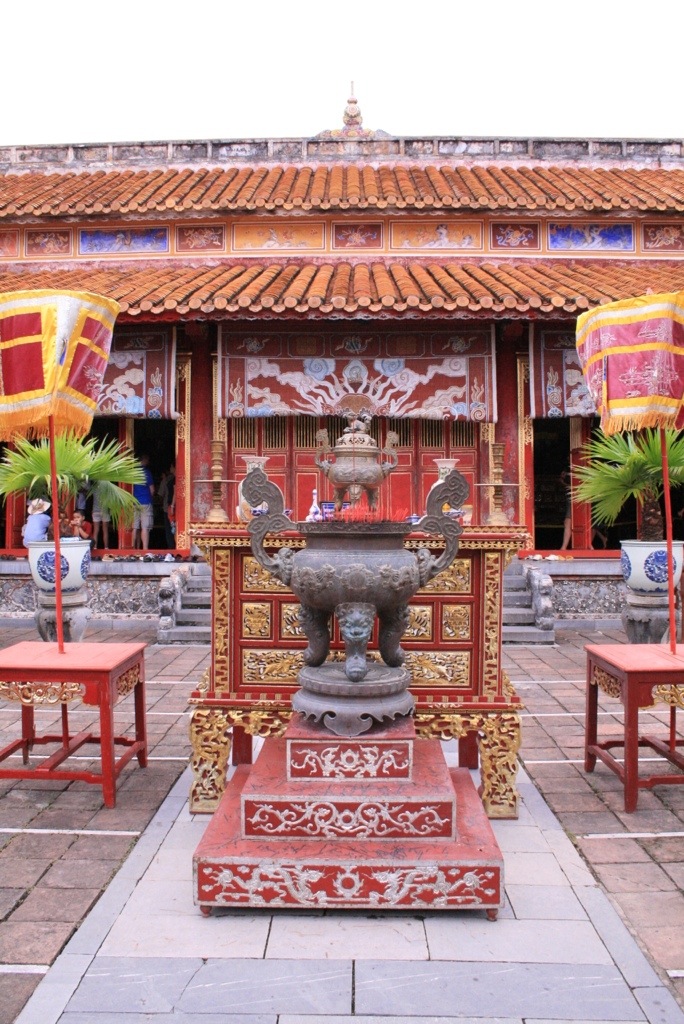
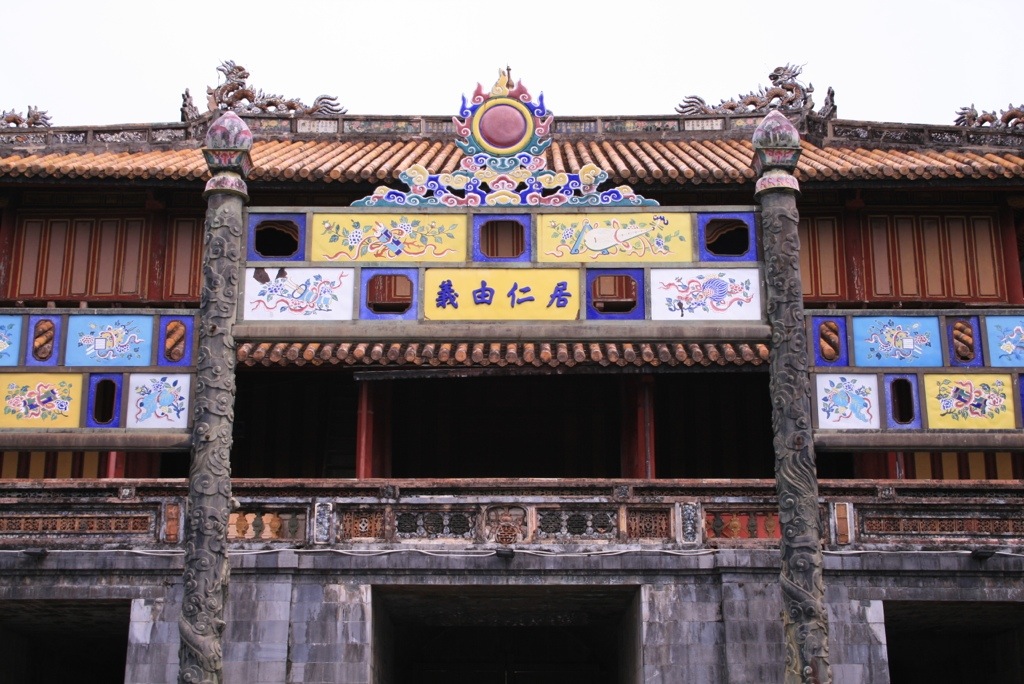
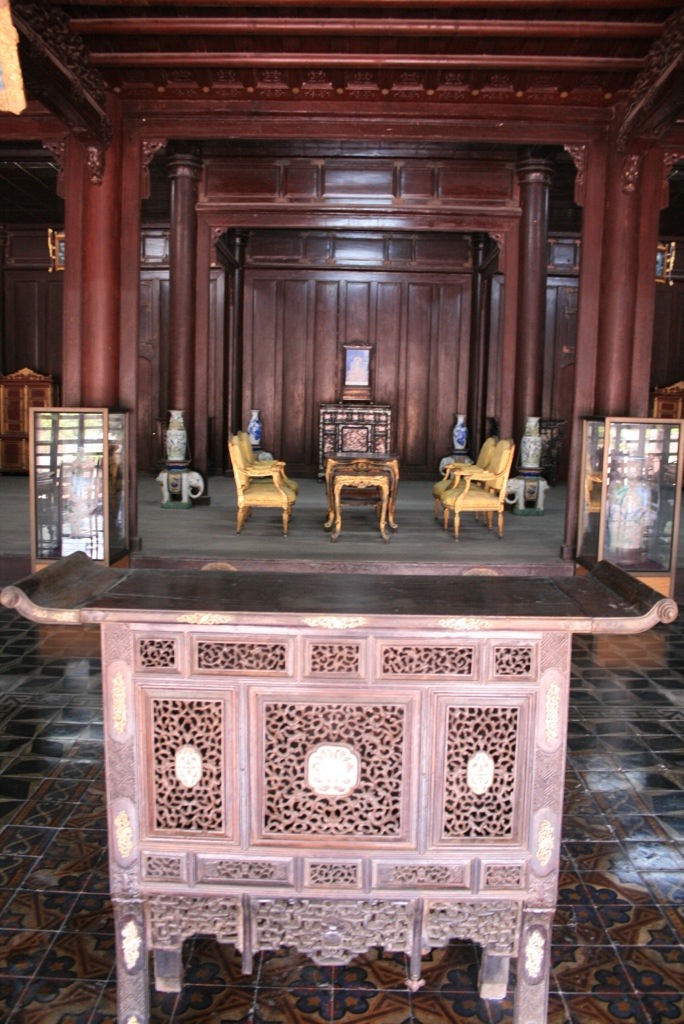
We visited the Citadel (fortress protecting a city) first, with its 2m thick walls surrounded by 4m deep moat, which runs 10km around the centre of the city. Unfortunately there is not much left of the Imperial Enclosure which was badly bombed during the Vietnam war – it use to house the emperors and their families. Unesco is slowly rebuilding the palaces, and the finished building’s so far look great! Thai Hoa Palace, a one room building where the main receptions and ceremonies took place, was interesting with an elegant and understated throne sitting in the middle of the room. We saw the first of many videos of propaganda about the war but it was still informative all the same. There was barely anything to see of the Forbidden Purple City.
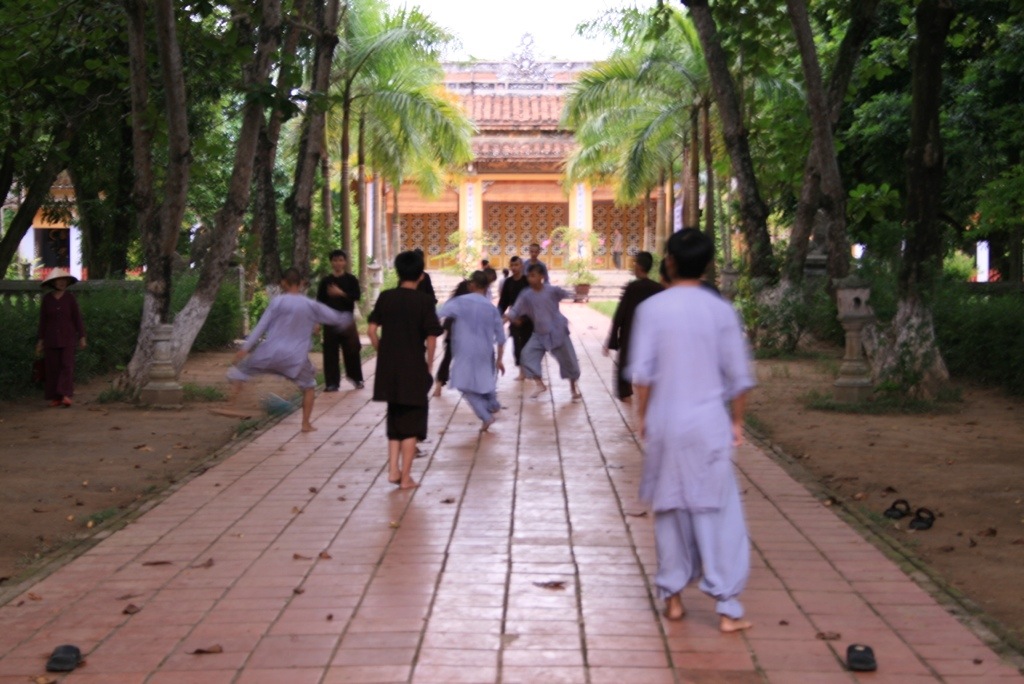
In the hot sun (sheltered by umbrellas) we ventured outside the walls in search of the Dieu De National Pagoda. The journey proved more entertaining then the final destination (we weren’t even sure if we had found it) as we walked through the local residential and shopping streets with no westerners in sight, and saw the ‘real’ Hue. When we arrived at the pagoda we thought we had arrived at a Monk School, with two games of soccer being played on the driveway by young monks. I’m not sure we even saw a pagoda!
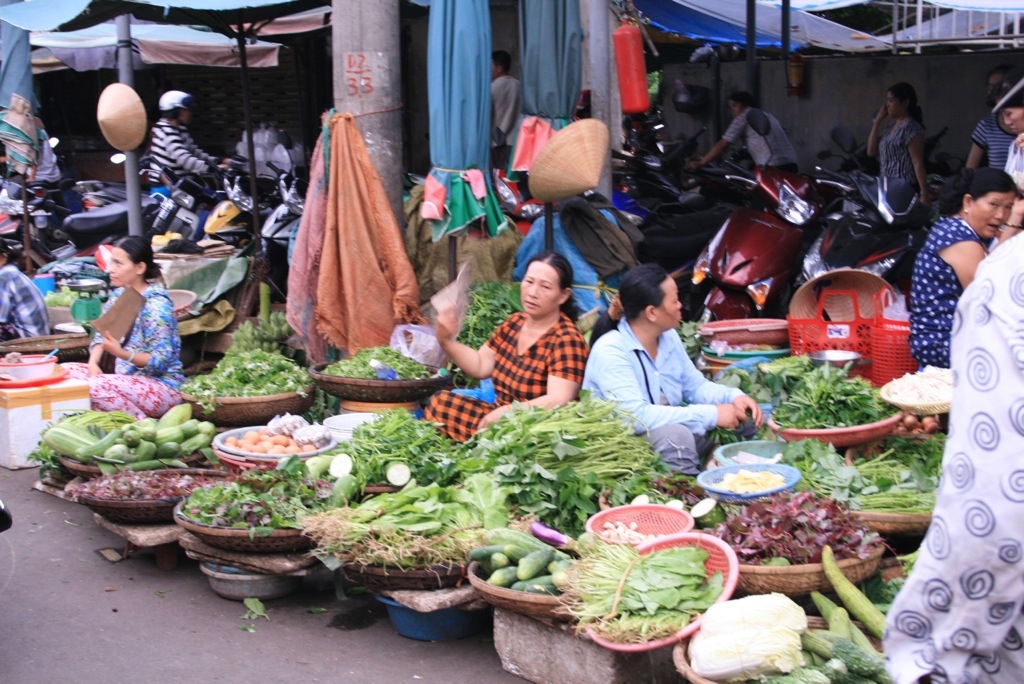
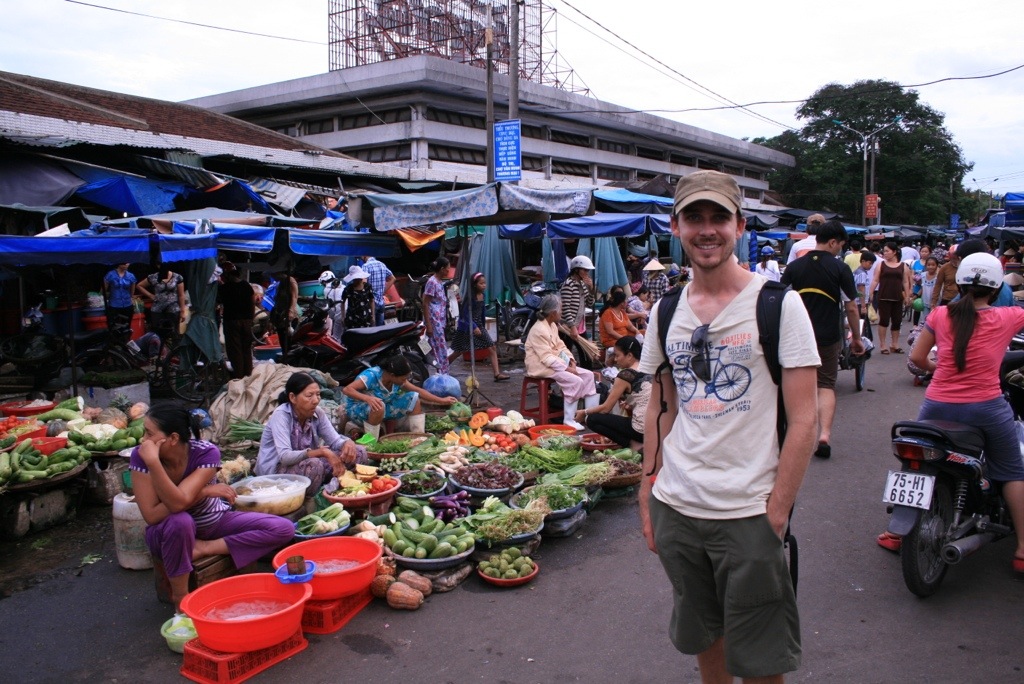
On the way home, we walked through the local fresh market, selling all sorts of veges and meat. The smells were both beautiful and disgusting, as were the sights. I was glad I was wearing my shoes and not jandels, to avoid getting fish and pig guts on my feet! It was sad to see a few ladies trying to sell fruit right in front of a rubbish dump – no one was buying there!
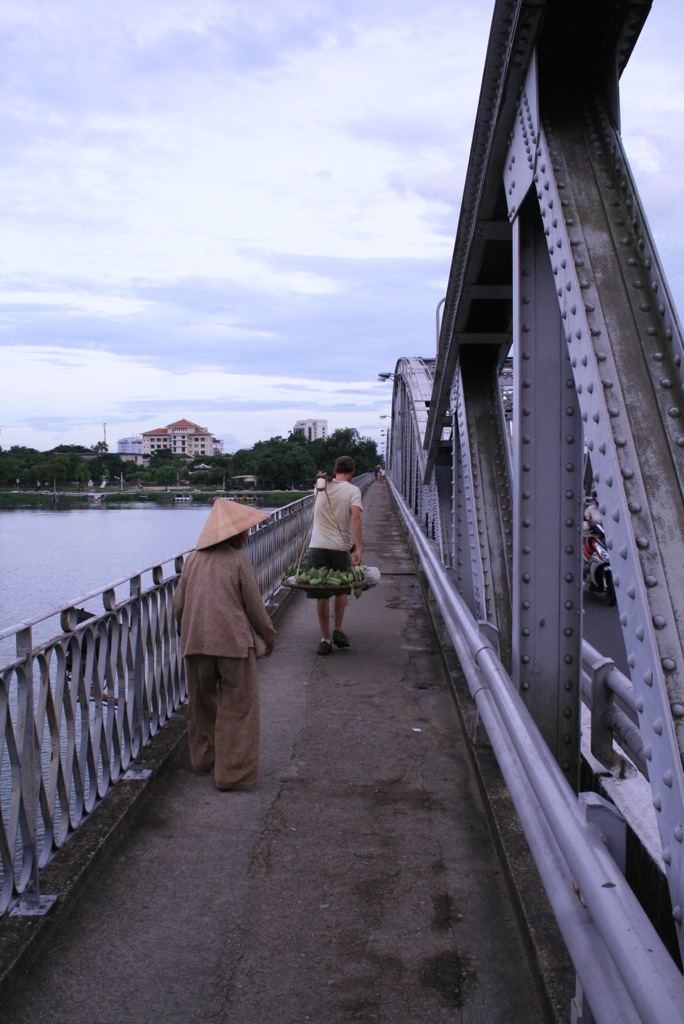
Crossing the bridge home, we took pity on an elderly local lady who looked like she was struggling with the baskets of bananas. Scott offered to help out, and was shocked to discover just how uncomfortable the bamboo stick was – so instead of crossing the bridge we decided to lighten her load by buying some of the bananas!
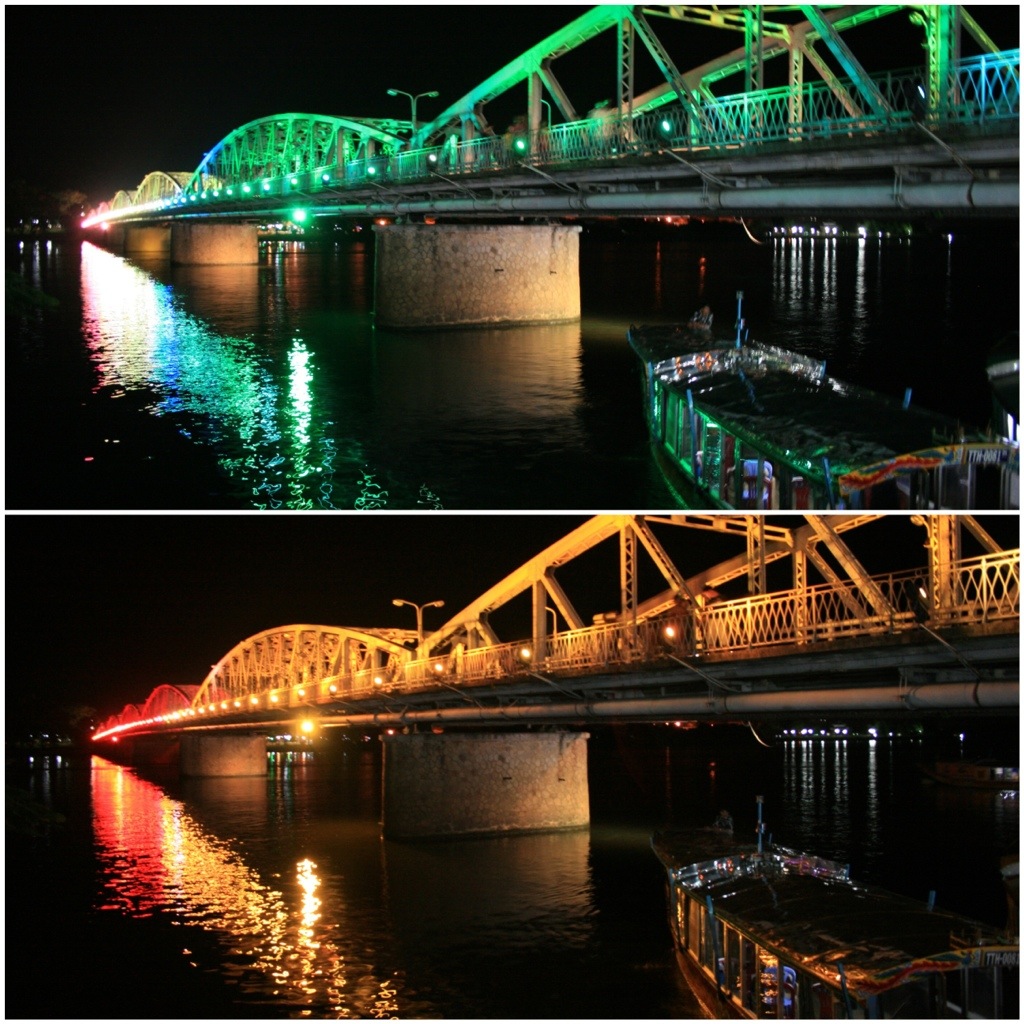
That night we took wandered the river bank, watching the colourful lights on the bridge and looking through another market which sold everything you don’t need.
Day two in Hue we spent speeding round on motorbikes (local drivers) visiting the old tombs. These tombs were impressive, not just a small building, but large areas of land extravagantly built and landscaped to each emperors taste. Khaki Dinh Tomb (emperor from 1916-25) was rather gothic-like with black concrete building and statues, but the inside was very colourful with mosaics lining every wall. Whipping round on the motorbikes was awesome, especially as it was the most effective way to cool down in the hot hot sun. We took small lanes and paths to the next tomb of Minh Mang (1820-40). It was my favourite tomb, mainly because of its natural setting in a forest around a lake which was so picturesque and peaceful. By the time reached the final tomb, Tu Duc (1964-7), we were super-hot and nearly ‘tombed out’. This one was interesting, more buildings and obviously more modern given the period, but the actual tombs were plain and boring – concrete blocks in a concrete courtyard surrounded by a concrete wall!
Later in the afternoon we visited the Thien Mu Pagoda, an icon of Vietnam, which was large and impressive, and busy! Followed by a few cheeky drinks on the way home and a new watch and pair of earrings.
We had tea that night a a local restaurant which had half a dozen ducklings waddling round its front door – the kind of thing that will either entice you in or turn you away from the restaurant. We thought they were very cute to watch, but didn’t order duck from the menu!







 fourfeettwopackssixmonths